National Consortium for Languages Education
UCL Institute of Education

National Priority Projects
National Priority Projects (NPPs) are collaborative projects that advance language teaching and learning through research-informed innovation in the classroom.
2026-27 projects supported by experts from NCLE fall into three strands:
- Two new strands: Human-mediated AI and Intercultural Learning;
and
- Phase 2: Building Momentum. Nine established Language Networks will be further developing and embedding initiatives from 2025-26 that strengthen teaching and learning and respond to local and national priority areas across 2026-27.
Every project, continuing or new, is designed to produce evidence and practical approaches that other teachers can adapt, and findings will be shared through Language Educators Online (LEO).
If you’d like to explore the project findings and resources from Phase 1: Driving change through new learning, scroll down to ‘Explore resources from the National Priority Projects on LEO’ for information on how to access these.
In 2026–27, NCLE is supporting NPPs in more than 30 schools across England, from Cumbria and the Northeast to Devon and Norfolk, as shown on the map (right).
To connect with current projects and express your interest in active involvement with NCLE, contact your local Language Network. Contact details can be found on the Language Network webpage.
Join us! You will be warmly welcomed.
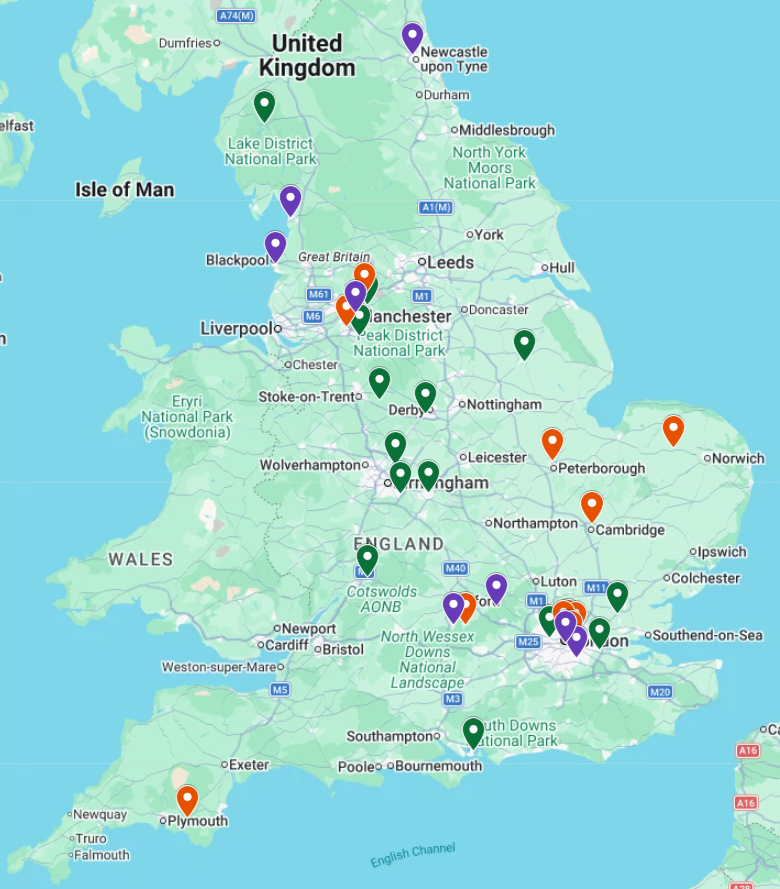
Map key – Green: Language Network schools
Purple: Human-mediated AI project schools
Orange: Intercultural Learning project schools
Explore the National Priority Projects
Phase 2: Building momentum
Established Language Networks are building on the success of their initial projects from 2025-26 and taking them into Phase 2. This will extend their reach and impact, strengthening teaching and learning across their regions.
NPPs span a wide range of identified priorities including employability and civic engagement, home, heritage and community languages, KS2–KS3 transition, task-based learning, and AI-supported inclusion and speaking confidence.
1. Languages leadership
Project title: Impactful Language Leadership
Led by: Trent and Tame Language Network
Lead Schools: The Arthur Terry School & Painsley Catholic College
The Trent and Tame Language Network project centres on the development of the Impactful Language Leadership Framework. Designed to support Language Leaders to think strategically and creatively about a persistent problem in their provision, the framework includes video snippets from the evidence-base, a leader’s workbook with reflection questions and tasks, case-study exemplification and signposting to additional learning on NCLE’s LEO platform. Using the framework will support Language Leaders to turn their vision for their department into lived reality in their classrooms.
If you are interested in connecting with the Trent and Tame Language Network about this project, contact ttln@atlp.org.uk.
2. Reducing barriers to language learning
Project title: ‘Sing to Speak’: Embedding AI-Generated Music in the KS4 languages curriculum
Led by: Kinder Language Network (part of the Northwest Regional Language Network)
Lead School: The Blue Coat School
The Kinder Language Network “Sing to Speak” project explores how embedding AI-generated songs in the KS4 curriculum can improve GCSE speaking fluency, pronunciation and confidence, particularly for vulnerable learners. Building on a successful pilot in German, it extends to Year 11 and to French and Spanish, evaluating impact through pre/post speaking assessments, confidence surveys and comparison across classes.
If you are interested in connecting with the Kinder Language Network about this project, contact institute@cranmeredt.org.
Project title: Smarter Scaffolding: AI for Inclusive Language Learning
Led by: Beeleigh Language Network
Lead School: Anglo European School
The Beeleigh project explores how AI tools can help teachers in creating adapted, scaffolded resources that improve access to learning and support participation in language lessons for learners with SEND. Teachers will trial AI-supported adaptations and evaluate their impact through student voice, teacher voice, feedback from learning support assistants and case studies of key pupils. Project findings will be shared with other schools.
If you are interested in connecting with the Beeleigh Language Network about this project, contact peetersc@aesessex.co.uk.
3. Motivation and Engagement
Project title: Making Room for Multilingualism
Led by: Swanswell Language Network (part of the West Midlands Regional Language Network)
Lead School: Sidney Stringer Academy
The Swanswell project explores how schools can make room for multilingualism so that pupils feel welcome to use, and take pride in, their home languages. Micro-CPD for teachers, a multilingual library, parent activities, and how-to guides will be evaluated through baseline and end-of-project questionnaires and focus groups, with a case study for LEO.
If you are interested in connecting with the Swanswell Language Network about this project, contact swanswellnetwork@sidneystringeracademy.org.uk.
Project title: Celebrating languages – Northwest Festival of Languages
Led by: Northwest Regional Language Network (led by Etherow Language Network, Kinder Language Network, and The Lakes Language Network)
Lead Schools: The Blue Coat School, Cheadle Hulme High School, and Keswick School
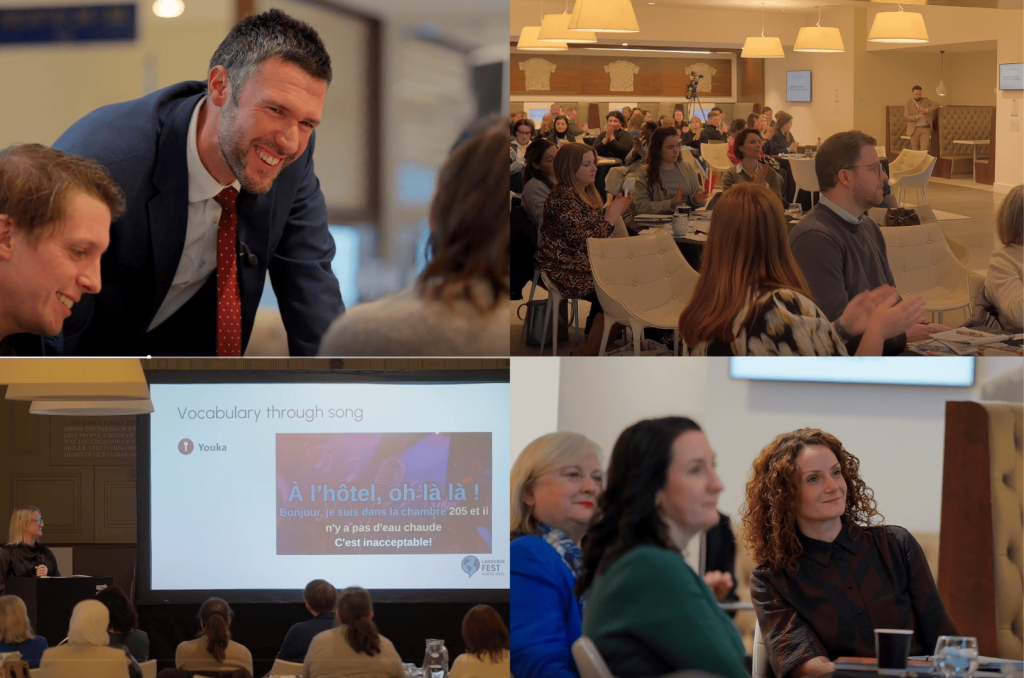
The Language Fest North West project aims to inform and inspire pupils and teachers about the opportunities language learning offers in order to raise motivation and GCSE uptake, especially in underrepresented areas of low engagement. A February 2027 pupil event and teacher event, supported by a dedicated website and targeted marketing, will be evaluated through on-the-day and follow-up questionnaires.
If you would like to attend the Language Fest Northwest teacher event in Manchester on 4th February 2027 check out the website for more information.
If you are interested in connecting with the Northwest Regional Language Network about this project, contact institute@cranmeredt.org.
4. Curriculum Innovation
Project title: Small Schools, Big Impact: Support for Primary Languages
Led by: The Lakes Language Network (part of the Northwest Regional Language Network)
Lead School: Keswick School
The Lakes Language Network project explores how primary languages resources and accompanying CPD, with a strong focus on target language and culture, can strengthen KS2 languages provision across the rural area and ease transition to KS3 in a context with multiple feeder schools. The network will expand its primary resources, with an introduction to the possibility of German learning, run a day of CPD for non-specialist teachers and continue to build outreach capacity and respond to network priorities.
If you are interested in connecting with the The Lakes Language Network about this project, contact admin@keswickschoolprimaryteachingresources.uk.
5. Intercultural learning
Project title: From Exchange to Understanding: Creating Meaningful Global Partnerships
Led by: Etherow Language Network (part of the Northwest Regional Language Network)
Lead School: Cheadle Hulme High School
This project aims to strengthen motivation for language learning and explores the potential for intercultural learning through interactions with partner schools overseas. Through pen-pal exchanges, video collaboration and shared projects, pupils will engage in meaningful communication with young people in other countries and teachers will develop practical models for sustainable international partnerships.
If you are interested in connecting with the Etherow Language Network about this project, contact etherowhub@chhs.org.uk.
Project title: From Celebration to Inclusion: Making Multilingualism Matter
Led by: Wells Language Network
Lead School: Dartford Grammar School
This project aims to move beyond celebrating multilingualism symbolically and instead embed it within everyday school life. Through curriculum development, student language ambassadors, staff training, and increased family engagement, the project will help learners see their languages as valued resources while fostering inclusion, belonging, and amplifying intercultural learning.
If you are interested in connecting with the Wells Language Network about this project, contact wellsnetwork@dartfordgrammarschool.org.uk.
Project title: Every Language Counts: Recognising language skills as assets
Led by: Grand Union Language Network
Lead School: Tudor Grange Academy
This project aims to strengthen recognition of home, heritage and community languages and promote multilingualism as a valuable part of learners’ identities. Through language passports, enrichment opportunities, assemblies and improved transition activities, this project seeks to create a school culture where pupils recognise their and others’ linguistic skills as assets and explores whether increased visibility of home and community languages influences learners’ perceptions of language, identity and participation in language learning.
If you are interested in connecting with Grand Union Language Network about this project, contact office@grandunionlanguagenetwork.tgacademy.org.uk.
Project title: Making Meaning Across Languages: The Intercultural Potential of Taking Risks in Creative Translation
Led by: Isbourne Language Network
Lead School: Pate’s Grammar School
This project aims to explore or amplify intercultural learning through encouraging creativity, problem-solving, and risk-taking to develop confidence in language learning. It will explore how creative translation activities on the theme of tourism and advertising will support pupils to engage in meaning-making from multiple perspectives and consider the cultural context behind language choices.
If you are interested in connecting with Isbourne Language Network about this project, contact isbournelanguagehub@patesgs.org.
6. Transition KS2 to KS3
Project title: Bridging the Gap: Building the foundations at KS2
Led by: Thames West Language Network
Lead School: Ada Lovelace C of E High School
The Thames West Language Network project explores how building secure foundations through KS2 German teaching can ease the KS2–KS3 transition. Weekly German teaching will continue at one primary school and extend to a second, alongside language teacher training for trainee primary teachers, with impact tracked through staff, pupil and parent surveys over a three-year period.
If you are interested in connecting with the Thames West Language Network about this project, contact contact jlyon@adalovelace.org.uk.
7. Progress across key stages
To learn more about how NCLE has been addressing this national priority, you can explore the Isbourne Language Network’s 2025-26 National Priority Project on Language Educators Online (LEO): NPP: Isbourne Network NPP | NCLE*
*Please note that you will need to create a LEO account or sign into your existing account to access these resources.
8. Assessment
To learn more about how NCLE has been addressing this national priority, you can explore the Beeleigh Language Network’s 2025-26 National Priority Project on Language Educators Online (LEO): NPP: Beeleigh Language Network NPP | NCLE*
*Please note that you will need to create a LEO account or sign into your existing account to access these resources.
9. Integrating the four skills
GCSE and beyond: The Power of Task-based Learning
Led by: Derwent Language Network
Lead school: Littleover Community School
The Derwent Language Network project explores how task-based language teaching (TBLT), target-language immersion and careers education can improve Year 9 students’ engagement, confidence and motivation to study languages at GCSE. A six-week German intervention will develop students’ communicative skills, evaluate impact through surveys and observations, and produce transferable resources for sharing across schools.
If you are interested in connecting with the Derwent Language Network about this project, contact d.piper@littleover.derby.sch.uk.
10. Teacher professional learning
All Language Networks help to strengthen teacher professional learning.
- Connect with your local network: Contact a Language Network using the details on the Language Networks page to find out about the in-person and online CPD they offer.
- Join a NCLE CPD webinar: Project Leads contribute to national NCLE CPD webinars. Catch up on previous sessions or register for an upcoming webinar on the NCLE webinars page.
- Explore learning from Phase 1: Findings from last year’s Phase 1 projects are available to use as professional learning. You can access them on the NPP page on Language Educators Online (LEO)*.
*You’ll need to create a LEO account or sign in to your existing one to access these resources.
- Learn from real classroom practice: LEO modules are grounded in real classroom experience, drawing on filmed examples of teaching practice from Language Networks.
11. Civic Engagement
Project title: Languages at Work: Bringing Careers into the Classroom
Led by: Solent Language Network
Lead school: Admiral Lord Nelson School
The Solent Language Network project explores how embedding employability, civic engagement, and international opportunities can raise the profile and uptake of languages. Key activities include a “Languages at Work” Day, a cross-phase Teach Meet, a British Council webinar, participation in the GCHQ Language Competition, and a STEM careers event at Portsmouth International Port (Ferry Port). The impact of these initiatives will be evaluated through participation data and pupil and staff voice.
If you are interested in connecting with the Solent Language Network about this project, contact esmith@salterns.org.
Project title: The multilingual advantage: Unlock your superpower!
Led by: Brayford Language Network
Lead school: The Priory Academy
The Brayford Language Network project explores how making employability skills explicit in languages lessons can help students, including speakers of Home, Heritage and Community Languages (HHCL), see the career value of languages and language learning. A “Skill of the Module” approach, skills-tracking grids, and employer links will be evaluated through student questionnaires and interviews. Resources will be shared across the network.
If you are interested in connecting with the Brayford Language Network about this project, contact brayfordlangnetwork@prioryacademies.co.uk
12. Home, heritage and community languages
Project title: From Celebration to Inclusion: Making Multilingualism Matter
Led by: Wells Language Network
Lead School: Dartford Grammar School
This project aims to move beyond celebrating multilingualism symbolically and instead embed it within everyday school life. Through curriculum development, student language ambassadors, staff training and increased family engagement, the project will help learners see their languages as valued resources while fostering inclusion, belonging, and amplifying intercultural learning.
If you are interested in connecting with the Wells Language Network about this project, contact wellsnetwork@dartfordgrammarschool.org.uk.
Project title: Every Language Counts: Recognising language skills as assets
Led by: Grand Union Language Network
Lead School: Tudor Grange Academy
This project aims to strengthen recognition of home, heritage and community languages and promote multilingualism as a valuable part of learners’ identities. Through language passports, enrichment opportunities, assemblies and improved transition activities, this project seeks to create a school culture where pupils recognise their and others’ linguistic skills as assets and explores whether increased visibility of home and community languages influences learners’ perceptions of language, identity and participation in language learning.
If you are interested in connecting with Grand Union Language Network about this project, contact office@grandunionlanguagenetwork.tgacademy.org.uk.
Amplifying Intercultural Learning Projects
How can language teaching move beyond fixed or stereotypical views of culture, and draw on the linguistic and cultural knowledge that pupils and teachers already bring? In these NPPs, with expert support from NCLE experts from UCL Institute of Education, schools design a classroom project around a shared focus, such as creative translation, international collaboration, identity and belonging, culturally responsive pedagogy, challenging stereotypes, or global citizenship. Findings will be shared as case studies and practical guidance for other teachers, and presented at an NCLE event.
Click on the themes below to learn more about the 17 Intercultural Learning NPPs being led by schools across the country:
Cultural Translation and Multilingualism
Connecting People, Languages and Cultures Through Poetry and Creative Translation
Led by: Sara Alonso Jimeno (Daubeney Primary School, London)
This project aims to amplify intercultural learning by valuing the many languages and cultures represented within the school community. Through creative translation, multilingual poetry, engagements with parents and carers and pupil performance, children will explore how language, culture and identity are interconnected and appreciate the richness of their own and others’ linguistic and cultural repertoire.
Thinking Like Linguists: From Creative Translation to Cultural Understanding
Led by: Yee-Mei Ngan and Cara Bleiman (Harris Primary Academy East Dulwich, London)
This project aims to help pupils explore the relationship between language, culture, values and ways of thinking. Pupils will explore Chinese idioms through creative translation and collaboration with a partner school in China. Through these pedagogies and interactions, learners will explore what is lost, gained or transformed when meanings move between languages and cultural contexts.
Making Meaning Across Languages: The Intercultural Potential of Taking Risks in Creative Translation
This project is led by the Isbourne Language Network as part of their Phase 2 National Priority Project. To find out more about their work, see the Intercultural Learning projects listed above under “Phase 2: Building momentum”.
From Celebration to Inclusion: Making Multilingualism Matter
This project is led by the Wells Language Network as part of their Phase 2 National Priority Project. To find out more about their work, see the Intercultural Learning projects listed above under “Phase 2: Building momentum”.
School Partnerships and International Encounters
From Exchange to Understanding: Creating Meaningful Global Partnerships
This project is led by the Etherow Language Network as part of their Phase 2 National Priority Project. To find out more about their work, see the Intercultural Learning projects listed above under “Phase 2: Building momentum”.
What Connects Us? Intercultural Learning with a Partner School in France
Led by: Emilie Stephenson (Sale Grammar School, Sale)
This project aims to increase pupils’ confidence in using French for meaningful communication by deepening their intercultural understanding. Through structured exchanges with students in a French partner school, learners will discuss topics relevant to their lives, explore similarities and differences, and experience language as a tool for real-world connection.
Beyond the Exchange: Unlocking Intercultural Learning for All
Led by: Theresa McGarrick (Wallingford School, Wallingford)
This project aims to maximise the intercultural learning generated by a successful German exchange programme and ensure its benefits extend beyond the pupils who travelled. Through structured reflection, pupil-created resources and school-wide sharing activities, pupils will explore cultural similarities and differences and help their peers learn from their exchange programme experiences.

Languages Without Borders: Building Intercultural Understanding Through Connected Communities
Led by: Jane Driver (North Cambridge Academy, Cambridge)
This project aims to increase engagement with languages by connecting pupils with peers from different countries and exploring linguistic diversity within their own communities. Through partner-school collaboration, heritage mapping and opportunities to choose their future language pathway, pupils will learn to build intercultural awareness and a stronger sense of agency as language learners.
Identity, Heritage and Belonging
Beyond Baguettes and Berets: Exploring the Diversity of the Francophone World
Led by: Stephanie Versen (Gospel Oak Primary School, London)
This project aims to challenge stereotypes about speakers of French and to help pupils see themselves reflected in language learning. By exploring the lives, stories and achievements of diverse francophone individuals, children’s assumptions of French-speaking communities will be challenged, raising questions about language, identity and representation in their own school community.
One School, Many Journeys: Exploring Migration, Identity and Belonging
Led by: Luan Lanham (Harris Girls’ Academy Bromley, London)
This project aims to build empathy and positive attitudes towards migration, identity and cultural diversity through storytelling and dialogue. Teachers will facilitate intercultural learning by exploring migration stories from pupils, families and staff, and migration within French-speaking societies. Through this work, the project seeks to enable pupils to gain a deeper insight into their own identities while learning to value the experiences of others.
Valuing Celebrating Community, Building Belonging
Led by: Carolyn Mahan and Katherine Bangurah (Queen Katharine Academy, Peterborough)
This project aims to strengthen understanding, trust and respect between pupils from different cultural and linguistic backgrounds, particularly Roma and EAL learners. Through collaborative exploration of music, dance, poetry and heritage, culminating in a community event, pupils will share their experiences and champion cultural diversity.

Every Language Counts: Recognising language skills as assets
This project is led by the Grand Union Language Network as part of their Phase 2 National Priority Project. To find out more about their work, see the Intercultural Learning projects listed above under “Phase 2: Building momentum”.
Intercultural Curriculum Design
From the Amazon to London: Exploring Place, Identity and Belonging Through Spanish and Indigenous Languages
Led by: Madison Nimmo (Harris Academy Bermondsey, London)
This project aims to use Spanish as a vehicle for exploring identity, place and belonging. Through a redesigned curriculum centred on the Amazon rainforest, Indigenous communities and comparisons with life in London, pupils will learn to challenge simplistic views of the Spanish-speaking world. The project explores how encounters with indigenous perspectives and different relationships to place create opportunities for intercultural learning.
One class, many cultures. A story about folklore
Led by: Raquel Tola Rego (Parkwood Primary School, Hackney)
This project aims to use Spanish as a bridge for intercultural dialogue and learning. Through a curriculum of storytelling, music, folklore and other artefacts as well as partnership activities with a school in Spain, pupils will have the opportunity to explore the similarities, differences and complexities of culture, connect their own experiences with others, and celebrate their multilingual school community.
How Languages Travel: Developing learner empathy through learning about Haitian Creole and its francophone histories
Led by: Faye Kandes (Stowford Primary School, Ivybridge)
This project aims to develop pupils’ empathy, intercultural learning and imagination by exploring the evolving nature of languages, identities, and cultures and how they are shaped by historical events such as colonisation. Using Haiti as a case study, pupils will engage with texts, language variation and intercultural encounters to better understand the movement and transformation of languages across communities.
French for a New Audience: Creativity, Identity and Purpose in Language Learning
Led by: Vincent Everett (Northgate High School, Norfolk)
This project aims to explore how creativity, cultural expression and diverse audiences can contribute to meaningful intercultural learning for secondary school language learners. Through a public French art exhibition and accompanying reflection on curriculum design, pupils will use French creatively while developing confidence, intercultural learning and a sense of identity as multilingual communicators.
Human-mediated AI Projects
How can AI support language learning while preserving teacher expertise, critical thinking and human agency?
Through a shared creative project co-developed with NCLE experts from UCL Institute of Education, participating schools explore how AI can be integrated meaningfully into language learning. Pupils develop a short, animated story in the target language, drafting and refining their scripts and using AI to support selected stages of the creative process. They critically evaluate AI-generated images, make informed creative decisions and record the narration in their own voices.
Supported by preparatory training and ongoing opportunities for reflection and collaboration, teachers explore the pedagogical opportunities and challenges of human-mediated AI. No prior AI expertise is required. The project culminates in an NCLE online event where participating teachers share their experiences, insights and professional learning.
Meet the 8 schools leading our Human-mediated AI National Priority Projects in 2026/27.
- Bay Leadership Academy, Morecambe (part of Star Academies)
- Didcot Girls School, Didcot
- Eden Girls’ Leadership Academy, Manchester (part of Star Academies)
- Grey Coat Hospital School, London
- Harris Academy Beckenham, Greater London
- Highfield Leadership Academy, Blackpool (part of Star Academies)
- Kenton School, Newcastle upon Tyne
- Princes Risborough School, Risborough
Explore resources from the National Priority Projects on LEO
Phase 1: Driving change through new learning
- Case studies and findings from Phase 1 NPPs are now available on LEO: NCLE’s free, open access CPD platform.
- Resources that can be adapted for your own classroom or department are now available to download, together with short reports covering the rationale and activities from each NPP, and a presentation from the project lead.
- Priority areas of development range from deploying AI chatbots for speaking assessment, KS2–KS3 transition, and employability and careers to parental engagement, curriculum models, and home, heritage and community languages.
If a project sparks ideas for your school, please contact the Language Network that led it, or NCLE. We are keen to hear from you.
Take a look and become part of our growing national community of language educators!
To start exploring, log in to LEO (or create your free account), and click the ‘NPP’ tab in the top menu.